
When your child has a disability, the school system can feel overwhelming. Between evaluations, IEP meetings, accommodations, services, and educational laws, it’s easy to feel like everyone else speaks a language you don’t understand.
That’s where a special education advocate can make a real difference.
A good advocate doesn’t replace you—they help you become a stronger voice for your child. They explain the process, help you understand your rights, and work alongside you to make sure your child receives an appropriate education.
But not all advocates have the same experience or approach. Here are some things to consider when choosing the right one for your family.
Look for Experience
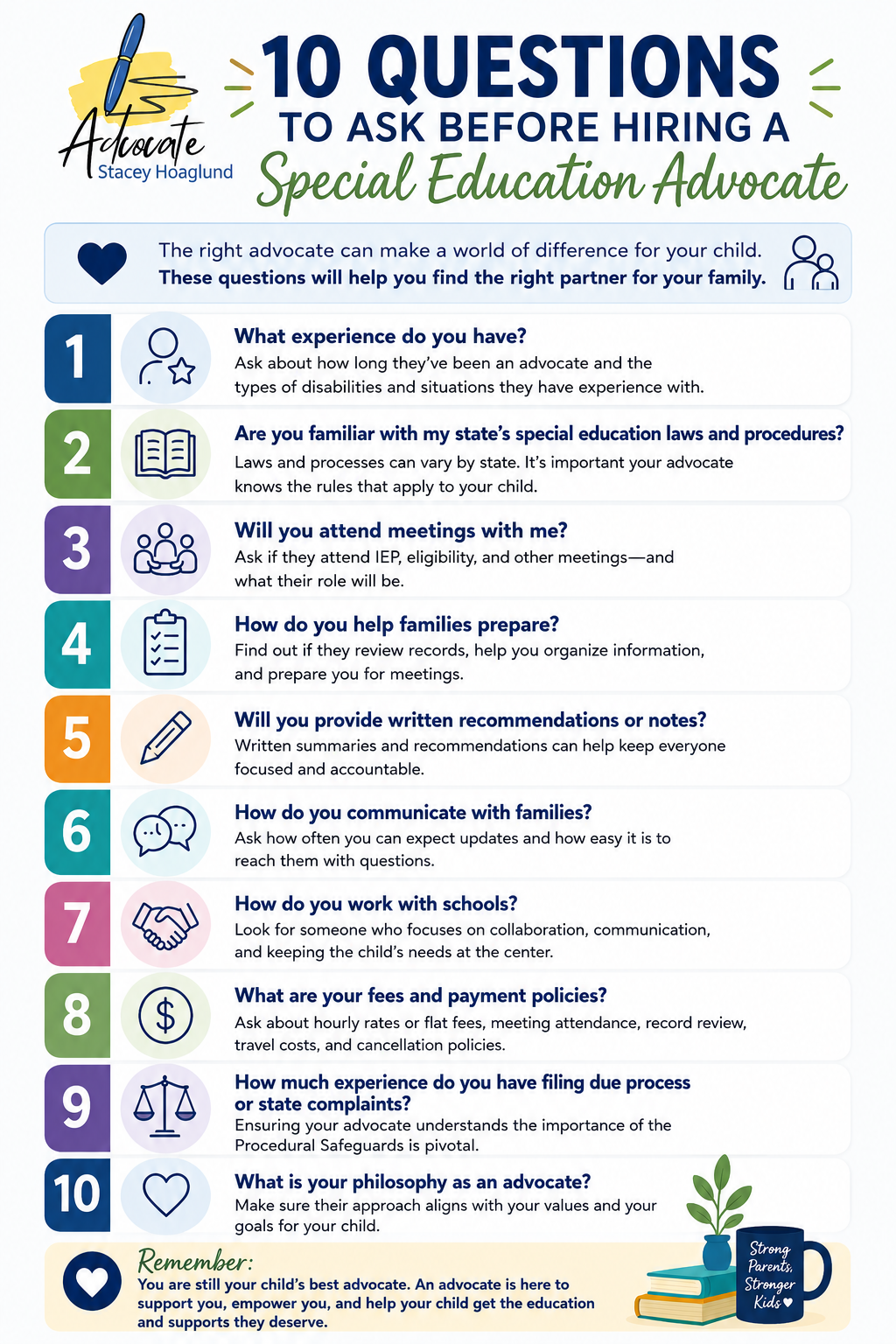
Ask about the advocate’s background.
Some helpful questions include:
- How long have you been working with families as an advocate?
- What types of disabilities do you have experience with?
- Have you attended many IEP and eligibility meetings?
- How many due process complaints have you filed?
- Are you familiar with my state’s special education laws and procedures?
Experience doesn’t have to mean decades of work, but it should include practical, hands-on knowledge.
Find Someone Who Explains Things Clearly
A great advocate should make complicated information easier to understand—not more confusing.
You should leave conversations feeling:
- More confident
- Better informed
- Less overwhelmed
- Ready for your next step
If someone relies heavily on legal jargon or makes you feel intimidated, they may not be the right fit.
Choose Collaboration Over Conflict
An advocate’s job is to help solve problems—not create them.
The best advocates know how to:
- Build respectful relationships with school staff
- Stay calm during difficult meetings
- Focus on facts and data
- Have knowledge of available curriculum and rights to inclusive education
- Keep conversations centered on the child’s needs
- Know when collaboration is likely to work and when stronger action is appropriate
Most children benefit when parents and schools work together whenever possible.
Ask About Their Process
Every advocate works a little differently.
Ask questions like:
- Will you review records before meetings?
- Do you attend meetings with families?
- Will you help me prepare ahead of time?
- Do you provide written recommendations?
- Can I contact you between meetings if I have questions?
Understanding what services are included can help avoid surprises later.
Make Sure They Listen
The best advocates spend time learning about your child before offering advice.
They should ask questions about:
- Your child’s strengths
- Your concerns
- Previous school experiences
- Goals for the future
- What success looks like for your family
If someone jumps straight into telling you what to do without first understanding your child, continue your search.
Be Clear About Fees
Before hiring an advocate, ask about costs. There are also some very good advocates who work for nonprofit organizations where you can obtain free advocacy, based on your economic situation.
Find out:
- Hourly rates or flat fees
- If they are associated with a nonprofit that provides no-cost advocacy options
- Meeting attendance fees
- Travel costs
- Cancellation policies
A good advocate should be transparent about pricing.
Trust Your Instincts
Perhaps the most important factor is how you feel after speaking with them.
Ask yourself:
- Did they listen to me?
- Did they answer my questions?
- Do they seem likely to stand with me during meetings at the school?
- Did I feel respected?
- Do they seem genuinely interested in helping my child?
- Do they seem to have an insight on how to take things beyond the school level if it’s necessary?
If the answer is yes, you’ve likely found someone who is a good fit.
Remember: You Are Still Your Child’s Best Advocate
Hiring an advocate doesn’t mean giving up your role as a parent. In fact, the best advocates work to empower families so they become more confident over time.
You know your child better than anyone else. A skilled advocate simply helps you understand the system, organize the information, and ensure your voice is heard.
Finding the right advocate can reduce stress, improve communication with the school, and help your child receive the support they need to succeed. Take your time, ask questions, and choose someone who makes you feel empowered, informed, and supported. The right partnership can make all the difference.
If you are in need of an advocate, we are here to help. Feel free to reach out for a free consultation. staceyhoaglund@gmail.com or 954-271-3703