
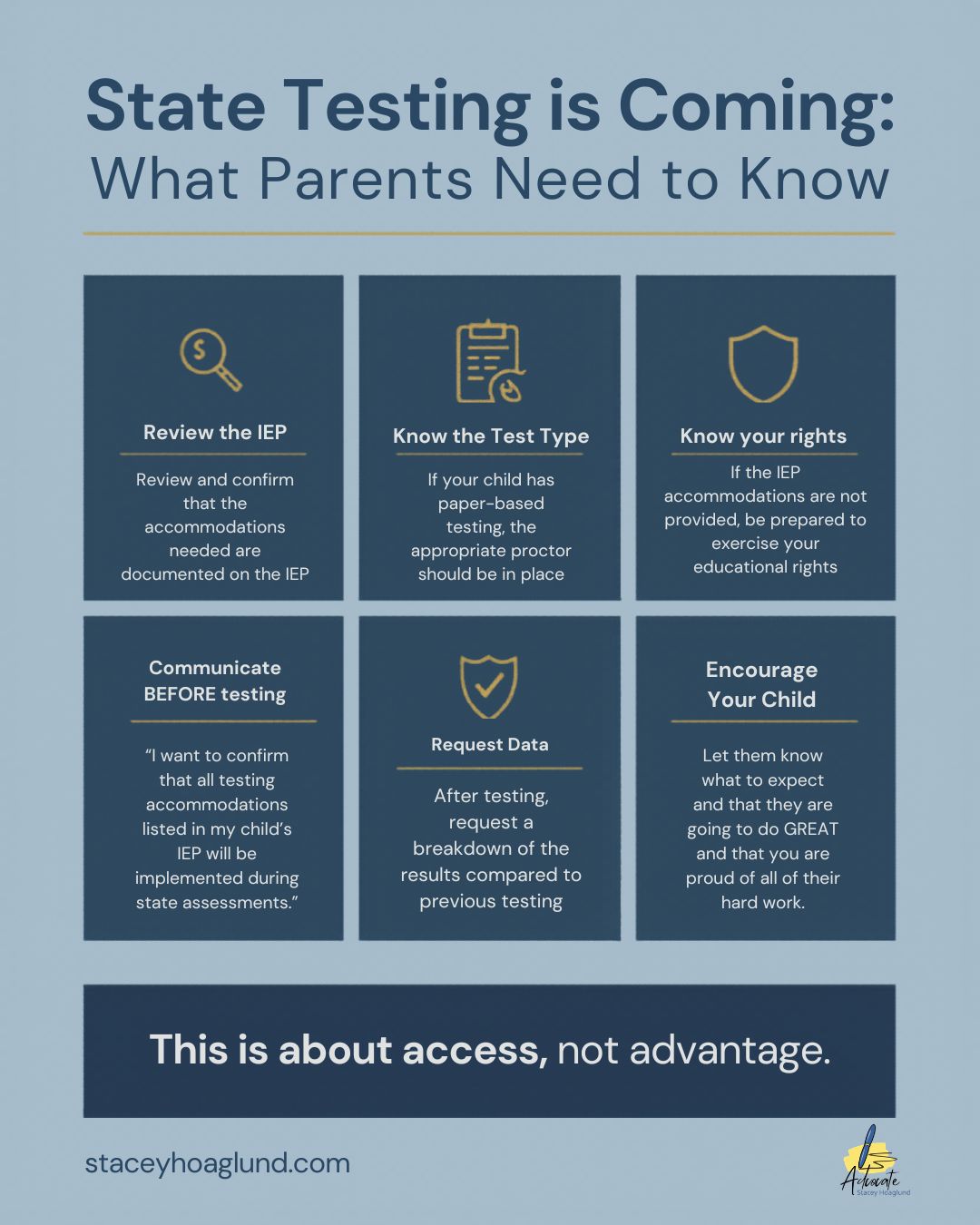
If you live in Florida (and basically anywhere in the US) and have a kid in public school, May is TESTING MONTH. Especially for 3rd graders, these are high stakes testing. For parents of kids with an IEP or a 504, it’s imperative that you know what’s in your IEP/504, how the school is implementing the testing accommodations and how to prepare your child.
Here are some tips to get you through:
📘 1. Review the IEP (Don’t assume it’s being followed)
Before testing:
- Check testing accommodations section
- Make sure accommodations are:
- Clearly written
- Specific (not vague like “as needed”)
- Confirm things like:
- Extended time
- Small group setting
- Read-aloud/text-to-speech
- Breaks
- Separate setting
👉 If it’s not in the IEP, it doesn’t have to be provided.
📣 2. Communicate with the School BEFORE Testing
Send a simple email:
“I want to confirm that all testing accommodations listed in my child’s IEP will be implemented during state assessments.”
Ask:
- Where will my child test?
- Who will administer the test?
- How will accommodations be provided?
👉 This puts everything on record.
🧠 3. Make Sure Accommodations Are Used ALL YEAR
Parents should ask:
- “Are these supports being used in class regularly?”
Because:
👉 If a student doesn’t use it regularly, they may not be allowed to use it on the test
📝 4. Ask for Practice with Accommodations
- Practice tests with:
- Text-to-speech
- Keyboarding
- Extended time
- Familiarity reduces anxiety and improves performance
🧩 5. Understand the Type of Test
Know:
- Is it grade-level or alternate assessment?
- What format (computer, paper)?
- Timing expectations
👉 This helps you prepare your child realistically
🚨 6. Watch for Red Flags
These are BIG concerns:
- “We don’t usually give that accommodation on this test”
- “They should try without it first”
- “We don’t have staff available”
👉 These are NOT valid reasons to deny accommodations
🧑🏫 7. Talk to Your Child (in a supportive way)
Help them understand:
- What testing will look like
- What supports they will have
- That it’s okay to:
- Ask for breaks
- Use their accommodations
- Not know every answer
👉 Reduce pressure, increase confidence
🛠️ 8. Prepare for Sensory & Emotional Needs
Especially important for many students:
- Ask about:
- Noise level
- Lighting
- Group size
- Request:
- Breaks
- Quiet setting
- Movement if needed
📊 9. Ask for Data AFTER Testing
After the test:
- Request results AND explanation
- Ask:
- Did my child receive all accommodations?
- Were there any issues?
👉 This helps for future advocacy
⚖️ 10. Know Your Rights (Important)
If accommodations are NOT provided:
Parents can:
- Request documentation
- Call an IEP meeting
- File a complaint if necessary
👉 This is a compliance issue, not a preference